

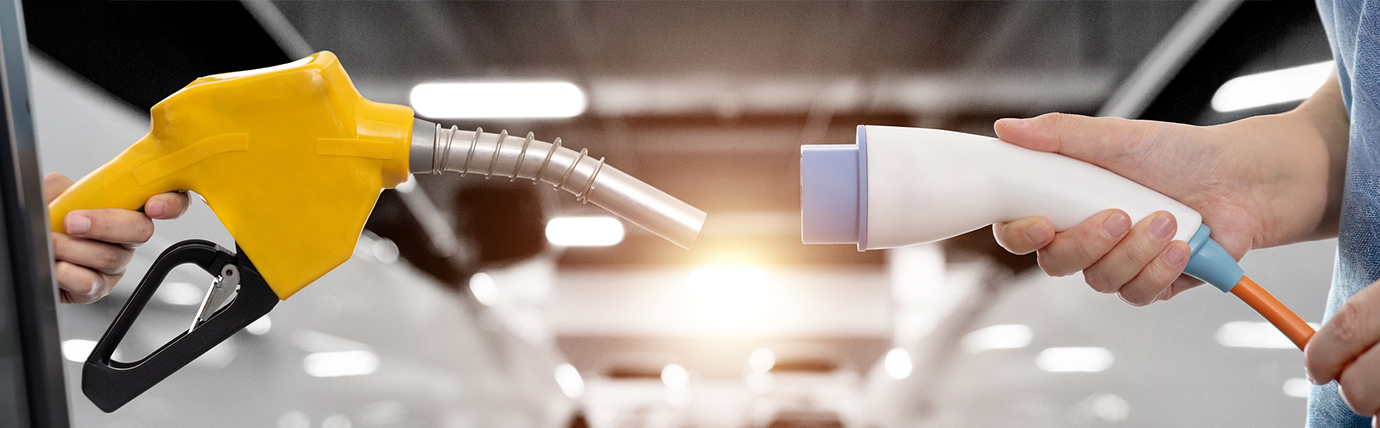
With the government looking to phase out the sale of new petrol and diesel (ICE) cars by 2030, there has been an ICE (internal combustion engine) vs EV (electric vehicle) debate ever since this announcement.
And while there were initial reservations about electric cars, we’re starting to see more motorists begin to embrace them.
A recent study conducted by PwC UK drives this home, as 70% of UK respondents plan on buying an electric car within five years – seeing a 5% increase from last year.
And with factors such as the cost of fuel increasingly on the rise, it would correlate with more motorists being ready to make the fundamental switch to an EV.
Table of contents
- What are common ICE vs EV questions?
- #1: What is the ICE vs EV cost comparison?
- #2: How long does it take to charge an EV?
- #3: What is the government’s Electric Car Grant incentive?
- #4: What does EV performance look like?
- #5: Are EV cars really better for the environment?
- Key takeaway: A greener approach that provides long-term EV fuel savings
- Make the switch today
Are you thinking about switching to an EV? In this article, we outline the key EV vs ICE factors to consider before making an informed decision.
Speak to a member of the teamWhat are common ICE vs EV questions?
For many, converting to an EV can feel like unfamiliar territory as most people are accustomed to ICE vehicles. This initial sense of EV anxiety can therefore raise a number of questions, especially around the following topic areas:
- Cost – up-front and running costs
- Convenience – fuel infrastructure and range
- Driving experience – power and quietness
- Government incentives – Electric Car Grant initiative
- Environmental factors – a greener motoring approach
For further context, Dr Colin Herron CBE, Professor of Practice at Newcastle University, provides his insight into EV trends and the market’s sustainability.
Read on as we provide answers to 5 common EV-related questions.
#1: What is the ICE vs EV cost comparison?
Unsurprisingly, EV vs ICE cost is arguably the top factor that motorists consider before purchasing an EV.
More specifically, this focuses on two key areas: purchase price and running costs. Once these are weighed up, motorists feel more comfortable in making an informed decision on which type of vehicle will be more cost effective.
We break this down further, referring to the table below.
Disclaimer: Figures shown are based on the respective car prices and average UK petrol price of £1.59 per litre at the time of calculation. Electric vehicle charging costs are estimated using an average of home charging and public charging rates. Actual running costs may vary depending on fuel prices, electricity tariffs, driving habits, vehicle model, charging methods, and location.
The information provided is for illustrative purposes only. Customers should carry out their own research and consider their individual circumstances before making any vehicle purchasing decision.
Purchase price
A common reason why motorists continue to opt for ICE vehicles is due to the purchase price. Generally speaking, EVS have higher price tags than their ICE equivalents.
However, this isn’t always the case.
Referring to our table, you can see that the retail price of the respective ICE and EV models are marginal, with the latter being cheaper. And with Motorfinity’s exclusive discounted price for eligible frontline workers, you can make huge savings!
See all our EV car dealsRunning costs
This is where EVs prove to be a real gamechanger.
Increasingly more motorists are becoming disillusioned with the price of fuel. In fact, a recent study found that rising fuel prices remain the top concern for over a third (36%) of motorists in the UK over the next 12 months.
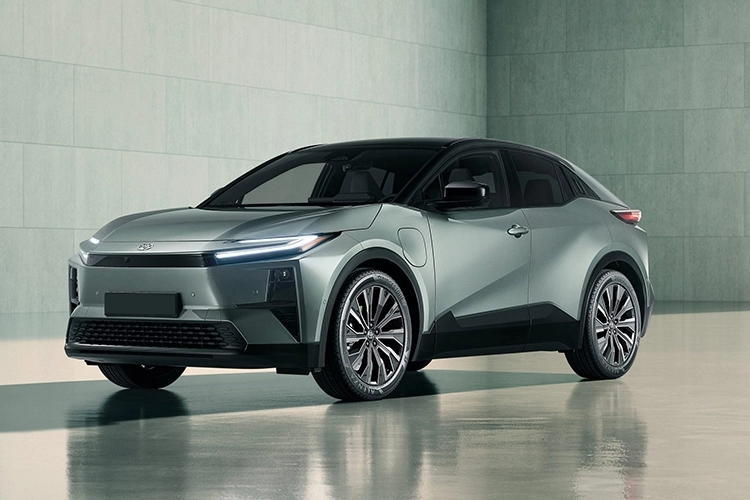
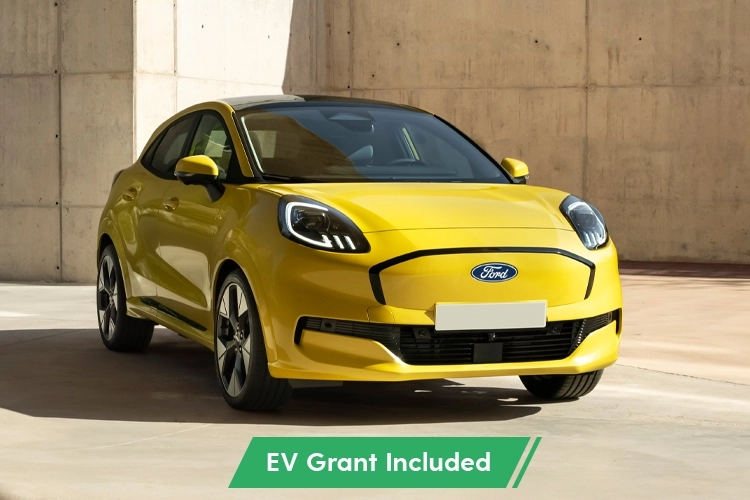
EVs offer a far more affordable alternative. Even with a higher tariff, our table shows that the electric Ford Puma and Toyota C-HR models work out approximately a third of the price, while the Skoda Enyaq is approximately a quarter.
Better still, if you were to spend the same amount of money charging an EV, you would see a far higher return on range compared to an ICE vehicle's mileage.
For example, spending £90 on charging a Skoda Enyaq on a high tariff would provide a range of approximately 1,416 miles – over double that of the diesel fuelled Kodiaq!
So, even in the worst-case scenario of charging on a higher tariff, you will still be able to experience significant long-term EV savings.

#2: How long does it take to charge an EV?
How long it takes to charge an EV is dependent on several factors, but the key element is the type of charging that is being used. This usually consists of two types:
.png)
.png)
A great advantage of owning an EV is the convenience charging provides. There are several approaches, with each approach using one of the above charge speeds.
These include the below.
Home charging
This is the most convenient method and is adopted by most EV drivers.
Home charging typically consists of a 7kW AC home charger that allows motorists to leave their car to be charged overnight, ready for the next day.
Benefits of home charging
- Fully charged for the next day
- Cheapest option (especially on off-peak tariffs)

Workplace and destination charging
These AC charge points (7kW-22kW) are found in destinations such as offices, supermarkets, gyms, and car parks.
Although not a go-to for a full charge, these types of charge points are handy to provide a top up for the duration that you’re parked.
Benefits of workplace and destination charging
- Provides a handy top up

Public rapid charging
These consist of DC chargers (50-350kW) that are located at motorway service stations.
Most commonly, these are used when planning a long journey and are a stop-off point to top up your battery and ensure that you reach your destination. Unlike the AC chargers, these offer rapid charging and only take up to 20 minutes to fully charge.
Benefits of public rapid charging
- Only takes up to 20 minutes to fully charge
- Ideal for long-distance travel
See our most popular EV and hybrid cars
#3: What is the government’s Electric Car Grant incentive?
Due to the government’s plans of phasing out ICE vehicles by 2030, they provide incentives that encourage motorists to switch by making EVs more affordable.
The most common incentive is their Electric Car Grant, which provides discounts on brand-new electric cars.
In order to be eligible, the following criteria must be met:
- The car being brand-new and fully electric
- Having a price tag of up to £37,000 (although higher-spec versions of up to £42,000 are also eligible)
- Meet strict environmental and sustainability criteria
Depending on what criteria the respective car meets, you will be granted one of two bands:


If you’re in the market for an EV, be sure to make the most of this support as it will expire in March 2030.
Find out more about Electric Car Grant eligibility#4: What does EV performance look like?
In terms of driving experience, motorists know what to expect from an ICE vehicle. The revving engine and overall mechanical experience have been the norm for decades.
But how does EV performance compare?
With a battery replacing the traditional engine, EVs have their own unique driving experience. And while this differs from what most motorists are used to, it doesn’t make it any less enjoyable. For many, it may well prove to be more desirable.
The main EV performance highlights are covered below.
Powerful acceleration
Instead of relying on an engine to rev up and shift through the gears, EVs consist of electric motors that produce maximum torque from 0 rpm. This means that EVs provide powerful, responsive acceleration from the outset without the need for gear changes.

Peacefully quiet
The absence of an engine and accompanying gears mean that EVs are far quieter than ICE vehicles. Gone is the engine vibration, juddery gear shifts, and mechanical noise. Instead, you can experience a peacefully quiet cabin that is almost silent at low speeds.

Smooth handling
EVs are heavier due to the weight of the batteries that are mounted low in the chassis. This provides them with a low centre of gravity, improving overall stability that contributes towards smooth handling, especially around corners.

Less wear and tear
EVs consist of far fewer moving parts and require less maintenance steps such as changing oil. Instead, you can experience modern engineering that feels more consistent over time without the worry of potential engine issues.

See our review of how the Ford Puma Gen-E performs
#5: Are EV cars really better for the environment?
The main reason for EV production is to take a greener approach to motoring that is far healthier for the environment.
But does this work in practice?
For those who are mindful of making a positive environmental impact, the answer is ‘yes’. EVs are much better for the environment compared to ICE vehicles, with the key reasons outlined below.
Decreased greenhouse gas emissions
With EVs powered by electricity rather than fossil fuels, they significantly lower greenhouse gas emissions such as carbon dioxide (CO2). This greener approach is crucial, with the lower level of CO2 reducing the change in global warming that affects the world of motoring and beyond.

Improved air quality
An EV's lack of tailpipe means that harmful pollutants such as nitrogen oxides alongside other particulate matter are avoided. This is great news as it helps to reduce issues such as air pollution, which directly impacts existing respiratory issues among the population.

Reduced noise pollution
Due to EVs being powered by a battery, they avoid the noise generated by a combustion engine. The knock-on effect of this is less traffic noise in urban areas, while creating a calmer environment for both people and wildlife.

Key takeaway: A greener approach that provides long-term EV fuel savings
There is a lot to like about owning an EV. Whether it is the quiet and comfortable drive you can enjoy or its safer approach to the environment, it ticks a lot of boxes.
Above all else, an EV offers tangible long-term benefits for your wallet when compared with ICE equivalents, as they allow you to run your car for considerably less for the same mileage!
While many have been apprehensive about the phasing out of the production of new ICE vehicles by 2030, the advantages you can enjoy as an EV owner mean that this is something to embrace, rather than fear.
See all our EV car dealsMake the switch today
Has the ICE vs EV debate inspired you to be in the market for an EV or hybrid car?
Our friendly team of professionals are experts in matching our customers with their ideal car at the best possible price!
Speak to a member of the teamAre you eligible?
At Motorfinity, we offer brand-new cars to a broad range of frontline sectors. If you're a frontline worker, you could be driving away in your dream car at a discounted price!
Find out if you are eligible for a brand-new carFAQs
Related articles

Electric Car Grant vehicle eligibility: how EVs have become more affordable
Estimated Read Time: 5 minutes
Find out how the government has made purchasing an EV more affordable with their Electric Car Grant incentive.
Read more
A road to success: Motorfinity proudly partners with Genesis cars
Estimated Read Time: 5 minutes
Find out more about our partnership with Genesis and the discounted models we have available for eligible frontline workers.
Read more
2026 Ford Puma Gen-E review
Estimated Read Time: 5 minutes
Read our in-depth review of the Ford Puma Gen-E and how you can secure yours at a discounted price today.
Read more