

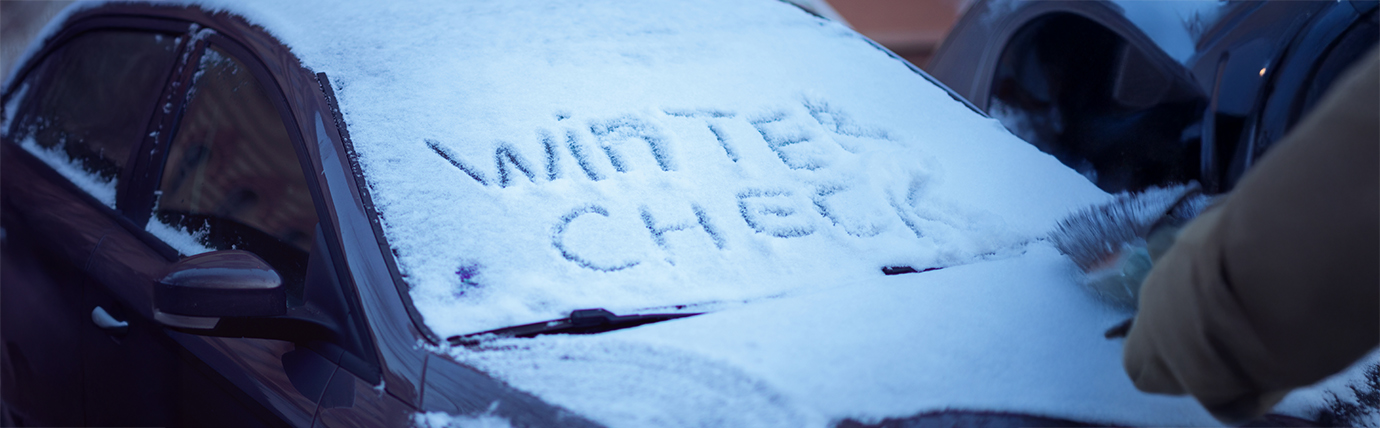
Now that we are entering the coldest months in the year, it’s essential that you keep your car merry and bright this Christmas by prioritising winter car care.
Although this may sound taxing, maintaining your car can be simple and time-effective – providing that you don’t neglect your duties!
Table of Contents
- Why is it important to maintain winter car care?
- Our top 8 tips of winter car care maintenance
- Tip #1 – Check coolant and antifreeze levels
- Tip #2 – Keep an eye on car engine oil
- Tip #3 – Prioritise tyre depth
- Tip #4 – Test your batteries
- Tip #5 – Replace any dim or blown bulbs
- Tip #6 – Check wear and tear of window wipers
- Tip #7 – Actively look for cracks in your windshield
- Tip #8 – Think smarter with your electric vehicle (EV)
- What should be your essential winter car care kit (for if anything goes wrong)?
- First aid kit
- Warm blanket or spare clothes
- High visibility jacket
- Water and snacks
- Phone charger/power bank
- Torch and batteries
- De-icer and scraper
- All I want for Christmas is…
- Let our experts find the perfect gift for you this Christmas
In this article, we share crucial winter car care advice that both prevents any nightmares before Christmas, while also sharing a must-have winter car care kit for if the worst-case scenarios do occur.
Speak to a member of the teamWhy is it important to maintain winter car care?
Winter is undoubtedly the harshest of the four seasons. It’s therefore no surprise that the cold weather that winter brings puts extra stress on virtually every part of your vehicle.
The potential knock-on effects of this? Making your car less reliable, less safe, and more expensive over the long-term to fix.
Instead, you can prevent this from happening by maintaining your vehicle with a regular car care for winter routine. By taking this time, you can protect your car during the winter season by:
- Preparing for icy or snowy roads
- Preventing breakdowns in extreme cold
- Protecting critical vehicle systems such as your engine
- Being prepared for potential emergencies
Above all, by focusing on winter car care, you can enhance your vehicle’s longevity which will save money over the long term.
Our top 8 tips of winter car care maintenance
When conducting winter car care maintenance, it’s important to focus on key areas that will hold your car in good stead in the harshest of conditions.
Do you ever wonder how to take care of your car during winter effectively? Look no further, as we share our top 8 winter car care tips.
Tip #1 – Check coolant and antifreeze levels
During the winter months, it’s crucial to ensure coolant/antifreeze levels are mixed to the correct ratio and topped up correctly. Failing to do so can lead to serious problems such as overheating, freezing damage, and even engine failure.
Taking the following simple steps can ensure that you maintain your coolant/antifreeze levels:
- Check the coolant level – ensure it remains between 'MIN' and 'MAX' but ideally closer to the latter
- Conduct a visual check – ensure your coolant is clear, if cloudy, it could be a sign of contamination
- Ensure the mix ratio is correct – most cars require a 50/50 mix of coolant/antifreeze (but check your car manual to make sure)
Top tip: It’s essential that your engine is cold when taking these steps. A warm engine will not only make the coolant/antifreeze levels inaccurate but can also spray boiling liquid when you open the lid. Leave your engine off overnight to avoid this.

Tip #2 – Keep an eye on car engine oil
Cold weather can thicken engine oil, meaning that it takes longer for it to reach the key areas of your vehicle. It’s therefore important to stay vigilant around engine oil levels to avoid potential engine failure.
We advise taking the following steps:
- Check the engine oil level – remove the dipstick, wipe it clean and put it back in place before checking where the oil level is on the ruler
- Top up the oil slowly – if the oil is low, top it up to ensure the level is close to ‘MAX’ (but be careful not to go over this level as it can cause damage!)
- Check you have put in a sufficient level of oil – oil replacement can be a case of trial and error, so repeat step 1 and add additional oil if required
Top tip: Make a conscious effort to park your car on level ground when checking engine oil levels. Failing to do so can lead to an inaccurate reading which potentially increases the chance of adding too much oil and damaging your engine.

Tip #3 – Prioritise tyre depth
The correct tyre depth is essential in winter as conditions such as snow, slush, and ice require a deeper tread to grip the road safely. We would advise a depth of at least 3mm for winter.
You can check the tyre depth yourself with the trusty 20p coin trick. Simply insert the coin into the tread groove and if you see the outer rim, that means that the tyre is below 3mm and therefore not safe for winter.
Top tip: Just before we enter the winter months, get your tyres checked by a professional to ensure you are prepared in advance. From here, you can use a 20p coin throughout the season to keep an eye on your tread depths.

Tip #4 – Test your batteries
Car battery care in winter is especially important as cold temperatures reduce battery efficiency which makes starting the car harder.
We would strongly advise that you should have your battery tested by a professional if it is over 3 years old. However, you can make regular observations in the meantime that include:
- Checking for corrosion – in the form of white or green powder which can be cleaned with baking soda solution and a wire brush
- Check the battery casing – for cracks or bulges as these are strong signs that the battery is nearing failure
- Ensure connections are tight and secure – loose connections can have a negative impact on the battery’s performance, so maintaining strong connections will prolong battery life
Top tip: You can help protect your battery by insulating it with a battery blanket during freezing temperatures or park in a garage if you have one.
Tip #5 – Replace any dim or blown bulbs
Given that we have much shorter daylight hours in winter, ensuring that your headlights, main beams, brake lights, indicators and fog lights work correctly is of paramount importance.
You can determine whether any bulbs need replacing by taking the following steps:
- Turn on all lights – including headlights, main beams, brake lights, indicators and fog lights
- Check the condition of the bulbs – looking out for dim light output, flickering, cracks, cloudiness or broken filaments
Top tip: For a more accurate reading, ask friends, neighbours or relatives to check your indicators and brake lights. If this isn't possible, reverse up to a wall and look out for the lights once you put them into action.

Tip #6 – Check wear and tear of window wipers
Window wipers generally last for approximately 6-12 months, making it better to be safe than sorry by the time winter arrives. In winter, both icy conditions and salt can damage them faster, meaning you should be vigilant throughout the season.
We would advise to conduct the following actions throughout winter:
- Check the rubber blade – for cracks, splits or missing pieces
- Inspect the frame – to ensure it hasn’t been bent or corroded due to road salt
- Spray washer fluid and engage the wipers – to see if the wiper skips or misses any spots
- Listen for noise – such as squeaking or scratching sounds as this indicates that the blades aren’t gliding smoothly
- Gently lift the blades and bend them slightly – to see if they snap or feel stiffer than usual
Top tip: A build up of snow or ice can sometimes be the culprit for poor wiper performance. You should regularly wipe the blades in winter to ensure they operate efficiently.
Tip #7 – Actively look for cracks in your windshield
Cracks in your windshield are especially troublesome in winter. The cold weather can cause the smallest of fractures to spread very quickly, potentially leading to the windshield to break.
We therefore recommend that you do the following:
- Check for visible damage – such as hairline cracks or star-shaped chips
- Check under the wipers – as cracks can easily be hidden
- Adopt the finger test – for anything that looks out of the ordinary to feel any small, raised edges
If you suspect there is a chip or crack on any of your windows, contact a professional at the earliest convenience.
Top tip: Avoid using boiling water to de-ice your windows as drastic changes in temperature can quickly worsen small cracks. Instead, opt for de-icer fluid or a scraper.
Tip #8 – Think smarter with your electric vehicle (EV)
For the EV drivers among us, there are still a number of actions you can take that will not only make your battery more efficient, but also enhance the overall driving experience.
This includes:
- Warming the car while you’re still plugged in – rather than using battery power
- Utilising heated seats – as they cost far less in energy than warming the whole car
- Parking in a garage or under shelter – to help retain heat and reduce cold weather drain
- Keeping your battery between 20-80% for daily use – while charging to 100% for longer trips
- Changing to eco mode – to provide smoother acceleration and braking, while reducing energy consumption
- Adjusting your regen braking – to make it more effective on icy roads (check your manual for settings)
Top tip: Winter efficiency improvements and battery management updates are often accessible via OTA updates. You should therefore prioritise updating your EV software this winter!

What should be your essential winter car care kit (for if anything goes wrong)?
Focusing on winter car care during the harshest months is likely to hold your vehicle in good stead, while substantially increasing your level of safety.
However, nothing is guaranteed as accidents and inconveniences can unfortunately occur – quite often when you least expect them.
If the worst-case scenario does occur, it’s essential for your own safety that you have an appropriate winter car care kit (or ice-capades survival pack!) to keep you safe while you wait for assistance from breakdown or emergency services.
Below, we include a list of must-have pieces of winter car care kit, with an example scenario for each:
First aid kit
You slide on black ice and are involved in a collision, causing a minor injury to your head. With a first aid kit to hand, you can patch yourself up before taking your next course of action.
Warm blanket or spare clothes
Your car breaks down on your way home in the middle of a country road. Luckily, you’re able to contact breakdown services but must wait for over an hour for them to reach you. The extra layers will help to keep you warm during this time, avoiding any medical problems.

High visibility jacket
Focusing on the previous scenario, by the time breakdown services are able to reach you it will be very dark with no streetlights to assist. When the breakdown service assistant calls to let you know they’re near, you stand outside your car wearing a high visibility jacket. This will then reflect in the driver’s headlights, allowing them to find you and assist.
Water and snacks
You are on the motorway and there has been a severe accident that has caused it to become gridlocked. Adverse weather conditions also mean that it may take several hours for the emergency services to rectify the situation.
Access to water and snacks will ensure that your blood sugar remains at a safe level, meaning that concentration levels remain high when you can eventually drive once the motorway is moving again.
Phone charger/power bank
You’re on the way home from visiting relatives in another city over Christmas and hit a pothole. This splits your wheel and makes it unsafe to drive. Thankfully, you have your phone on charge and are able to call breakdown services, who can continue to contact you whilst they are on their way.
Torch and batteries
You start the ignition to leave a holiday break in the Lake District and the engine doesn’t start. You’re confident jump start leads that you can attach to a friend’s car will solve the problem. However, it is 5pm in December and very dark.
Luckily, you have a torch in the boot, meaning that you can see where to attach the jump start leads and (hopefully) get up and running in no time.

De-icer and scraper
You’re on your way to work but it has been freezing temperature overnight, meaning that there is a thick sheet of ice on your windscreen. You’ve thought ahead and have both de-icer and a scraper in the glove compartment of your car, which you use to quickly remove the ice to ensure you arrive to work on time.

Let our experts find the perfect gift for you this Christmas
If you’re in the market for a new car, then it’s equally as important that you conduct practical winter car care to ensure it remains shiny and bright.
Providing that you are an eligible frontline worker, our team of experts are readily available to match you with your dream car – at a heavily discounted price!
Speak to a member of the teamAll I want for Christmas is...


Are you eligible?
Our nation's Armed Forces, Veterans, Emergency Services, NHS, Police and Prison Services, Education and Social Care sectors and more form our eligible audience.
Related Car Reviews and Articles

Front-wheel drive vs. rear-wheel drive: What do consumers prefer?
Estimated Read Time: 5 minutes
Understand the difference between front-wheel drive and rear-wheel drive and which is more beneficial for you.
Read More
Why buy a car online: The advantages of online car buying in the UK
Estimated Read Time: 5 minutes
Understand the advantages of purchasing a car online and why it could be the way forward for you.
Read More
Acknowledging the challenges faced by frontline workers over the festive period
Estimated Read Time: 5 minutes
Gary Hayes, co-founder and CEO of PTSD999, provides an eye-opening insight into the challenges faced by frontline workers over the Christmas period.
Read More