


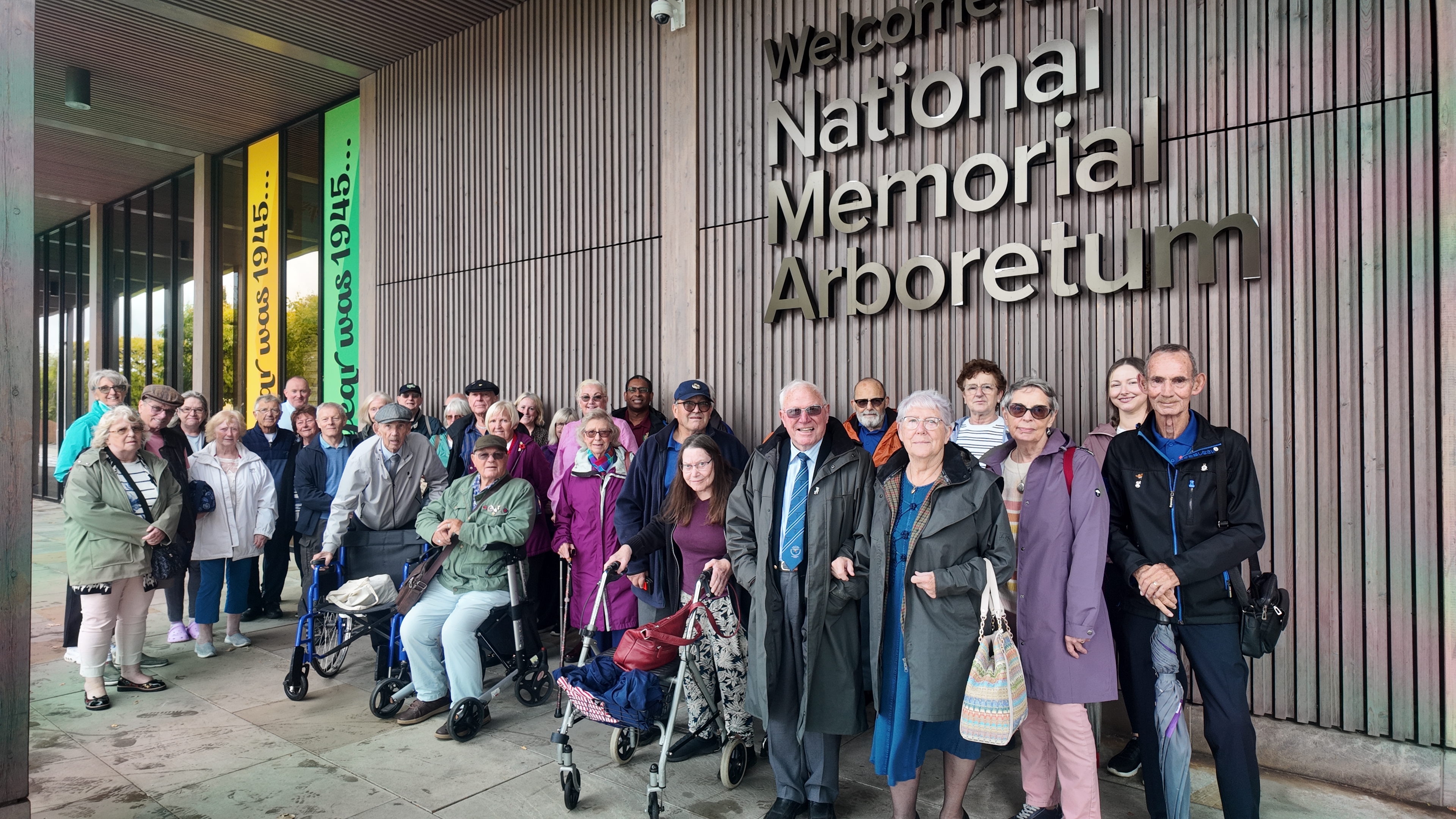
If you haven’t already visited the National Memorial Arboretum, let this be your invitation to put it on your ‘must do’ list as soon as possible. Our recent visit with the Newark Patriotic Fund proved to be one of those rare experiences that stays with you forever.
In this article, we explain what the National Memorial Arboretum is, while detailing our breathtaking experience during our visit.
Table of Contents
What is the National Memorial Arboretum?
The National Memorial Arboretum is a living, breathing tribute to service and sacrifice. Spread across 150 acres in Staffordshire, this extraordinary place defies simple definition. Is it a memorial garden? A place of pilgrimage? A historical archive carved in stone or wood? The answer is beautifully simple – it’s whatever personally resonates with you.
Remarkably young for an institution of such significance, the Arboretum's story began in 1994 when Prime Minister Sir John Major launched an appeal to create a national centre of Remembrance. By 1996, the first trees were planted, and today, approximately 25,000 trees stand as living monuments across the grounds. Many carry deep symbolic meaning, rooted in the stories they commemorate.
It’s a place where attention to detail is second to none. The cherry blossom tree planted in tribute to Anne Frank is hard-pruned on her birthday each year, preventing it from blossoming – an echo of how she was stopped from blossoming into adulthood by her untimely death at the hands of the Nazi regime. At the heart of the Police Memorial stand horse chestnut trees, a subtle nod to their historical use in the making of truncheons.
In just three decades, this extraordinary place has welcomed 300,000 visitors annually, each finding their own connection among more than 400 memorials honouring not just the Armed Forces, but Emergency Services and civilian organisations who have served our nation.
The Heart of Remembrance – our first port of call
At the spiritual centre of the Arboretum stands the Millennium Chapel, holding a unique distinction: It's the only place in Britain where the Act of Remembrance is observed every single day. At precisely 10:50 each morning, visitors gather to witness the Last Post, observe the two-minute silence, and hear the Reveille. This daily ritual ensures that no day passes without recognition of those who gave their lives in service.
Fitting that our journey started here.
The chapel itself is a masterpiece of symbolic craftsmanship. Constructed primarily of wood, its roof rests upon twelve columns of Douglas fir, each hand-carved by ex-Royal Marine and Shropshire woodcarver Jim Heath to depict one of the twelve disciples. At the entrance, we encountered the Millennium Prayer, penned by thirteen-year-old competition winner Anna Crompton, a reminder that Remembrance spans generations.
Stories carved in stone
Walking through the grounds is like turning the pages of a profound history book. The words carved on memorials echo through time with reminders to honour the weight of sacrifices made:
"When you go home, tell them of us and say, for your tomorrow, we gave our today." (Words from the Kohima Epitaph)
The Burma Railway memorial is particularly haunting. Constructed from 30 metres of actual track and sleepers from the original "Railway of Death," it commemorates the 16,000 allied prisoners of war and 100,000 labourers who perished during its construction:
“One life was lost for every sleeper laid, a chilling arithmetic of human cost.”

A place to pay personal respects
Winston Churchill's words on the Submariners' Memorial remind us of the particular courage required beneath the waves:
"Of all the branches of men in the forces there is none which shows more devotion and faces grimmer perils than the submariners."
Bob, the submariner in our party, found special solace here.
Honouring hidden histories
Some memorials tell stories only recently acknowledged. Shot at Dawn remembers soldiers executed for cowardice or desertion during the First World War. Many were the youngest boys who served traumatised by conflict – many ‘shell-shocked’, they would now be recognised as suffering with PTSD.
The site is particularly haunting situated in the east-side woodland where first light breaks.
Most recently, the LGBT Memorial – unveiled by King Charles III in his first official engagement supporting the LGBT+ community – acknowledges a painful chapter in military history. Designed by the Abraxas Academy, the bronze sculpture resembles a crumpled letter, echoing the personal correspondence used as evidence against service members during the ban that lasted until 2000. For the veterans who endured intrusive investigations, dismissal, and even imprisonment simply for who they were, this memorial represents hard-won closure.
And so, it continues
During our visit, we approached the central Armed Forces Memorial and witnessed something profoundly moving - the Arboretum's stonemason meticulously engraving a new name adding to over 16,000 names of those who have died in service since the end of World War 2. With immense concentration and respect, he was etching the name of Squadron Leader Mark Long, the Red Arrows pilot who recently died in service. A solemn reminder that the work of Remembrance never ends.

Created by veterans for veterans
The Desert Rats Association Memorial embodies another powerful dimension of the Arboretum's mission. This memorial saw veterans living with life-changing injuries learn stone carving techniques over two intensive courses, then carve the sand motif into the memorial plinth themselves. It stands as testament to resilience, the healing power of creation, and the undying respect of the veteran community.
A personal pilgrimage
What makes the National Memorial Arboretum so powerful is its deeply personal nature. Among the symbolic elements – like sand brought from the beaches of Dunkirk – every visitor finds their own point of connection. Perhaps it's a regimental memorial, a tribute to a particular service, or simply the Polar Bear monument, the Arboretum's very first memorial, standing as a reminder of where this journey began.
We asked members of our veteran community what is most significant for them:
“We love the fact that the service of Remembrance takes place every single day. It’s so important that we never forget the ultimate sacrifice made by so many. Yes, Remembrance Day is a poignant ritual, but, for us, service is in our DNA, always remembered, always valued.” (John Bateson MBE).
“The fact that all the site is accessible even to those less mobile by using the small train. The commentary on the train gives a comprehensive explanation about the memorials. I’ve visited 4 times and find the ‘Noddy train’ invaluable. My £7 ticket is worth every penny and helps with the upkeep of this immaculate place.” (Michael Reilly, RAF Veteran).
“I was blown away by the attention to detail in the creation of every memorial. The Armed Forces Memorial with the gap in the vast walls where a shaft of light appears at the eleventh hour on the eleventh day of the eleventh month is a wondrous feat of engineering.” (Olly Waszkiewicz, Motorfinity Group).

Why visit now?
In our increasingly fragmented world, the Arboretum offers something rare: a space to pause, reflect, and connect with the threads of service and sacrifice that have woven the fabric of our society.
The National Memorial Arboretum isn't simply a place to visit. It's an experience that reminds us of our shared debt to those who came before, and our responsibility to those who serve now. It's a place where gratitude becomes tangible, where history feels present, and where Remembrance is not just an annual ritual but a daily practice.
Please do make it your next destination. You'll carry this place and all it represents with you forever.
Book your visit todayRelated articles
_1718897366.jpg)
The RAF in World War 2
Estimated Read Time: 3 minutes
Discover the history of the RAF during World War 2
Read More
D Day 80 | 1944 to 2024
Estimated Read Time: 3 minutes
Find out more about D-Day on its 80th anniversary.
Read More
80th anniversary fly past
Estimated Read Time: 3 minutes
Find out more about this essential chapter in history marked by the iconic Lancaster fly past
Read more