

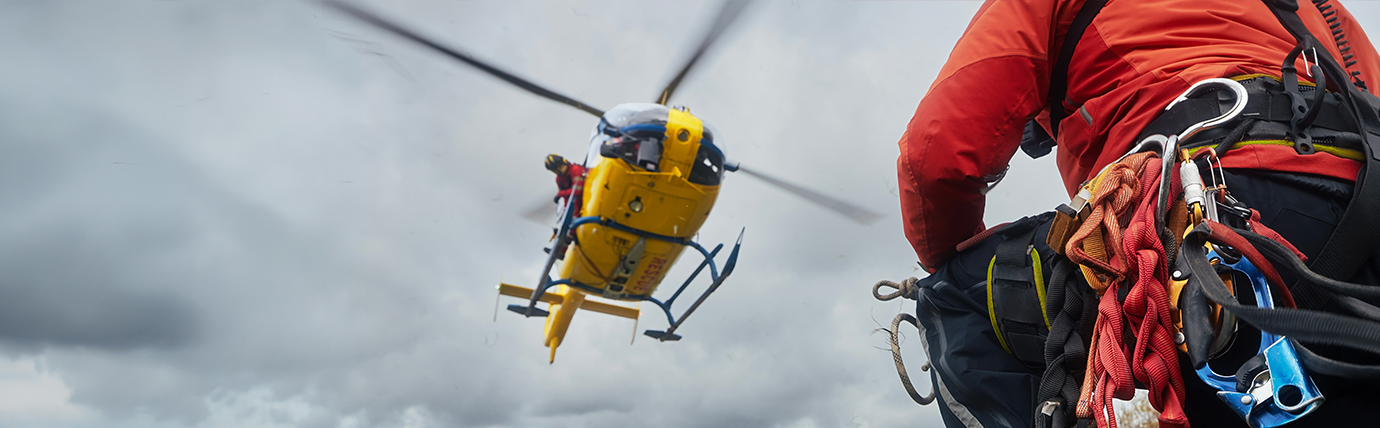
What if it was your loved one?
Your child. Your parent. Your partner. Your friend.
Table of Contents
- About the author - Neil Balderson
- An era of dramatic change
- From four teams to a national capability
- The scale of searching has changed
- The searcher is still the most important piece of equipment
- Searching has become more scientific
- From the ground to the air, to the water
- But there is one thing that hasn’t changed
- Ten years of progress. One unchanged purpose.
- A huge congratulations
- Motorfinity, driven to reward you
Someone you know and love disappears, and suddenly the ordinary world becomes a terrifying place. You want someone to find them. You want them to bring them home. You want the opportunity to say those words that suddenly seem more important than anything else:
“I love you.”
This is the story of Lowland Rescue.
About the author - Neil Balderson

Neil Balderson, Senior Engineering Manager by day, has over 10 years’ experience as a charity leader, trustee and skilled director of public relations in the voluntary sector. His passion, dedication and commitment to search and rescue is exemplary. With over 2000 hours generously and professionally given freely for Northamptonshire SAR, he is an extraordinary ambassador for the organisation.
When Motorfinity first began, Neil wrote an informative, heart-rendering article for Heroes Magazine to highlight the role of one of the lesser-known search and rescue organisations.
‘Lowland Rescue – finding the missing: 10 years on’ updates the stats, the developments rapidly being made, and, most of all, champions the people giving up evenings, weekends, sleep, family time and holidays to go looking for someone they have never met.
An era of dramatic change
Ten years ago, I wrote about an organisation that many people had never heard of.
Lowland Rescue.
At the time, more than 1,800 volunteers across 35 teams stood ready to search for missing people across the UK. They were trained, equipped and available 24 hours a day, 365 days a year. They were, as the phrase went, “professional in all but pay.”
A decade later, that description still holds true.
But almost everything around those volunteers has changed.
And it has changed dramatically.
From four teams to a national capability
Lowland Rescue was conceived in 1991 through the coming together of four teams. More than three decades later, it has developed into a national search and rescue capability, with teams operating across the UK and Ireland and more than 1,800 professionally qualified volunteers. With new teams joining from Anglesey, Pembrokeshire, Maryport, and Yorkshire.
It is now part of the UK’s formal search and rescue framework, working alongside organisations including Mountain Rescue, the RNLI, Coastguard Rescue and other specialist services.
Its role remains distinctive.

From Hill to High Water.
Lowland Rescue operates predominantly where the mountains end and the coast begins: across towns, cities, farmland, woodland, parks, canals, rivers, lakes and the huge stretches of countryside in between.
And increasingly, the organisation is being asked to do more.
In 2025, Lowland Rescue recorded 987 deployments, a consistent number as with 10 years ago. The teams generated an extraordinary 211,000 volunteer hours.
That is 211,000 hours of people giving up evenings, weekends, sleep, family time and holidays to go looking for someone they have never met.
And they do it because that person matters to somebody.
The scale of searching has changed
In 2025, Lowland Rescue recorded 987 search deployments by primary teams, involving 878 missing people.
The demand is significant, but perhaps the most revealing figure is the amount of time devoted specifically to searching.
The organisation’s own assessment puts the economic value of its search work and associated training at around £13.2 million when compared with the full economic cost of police resources.
But those numbers only tell part of the story.
Statistics cannot tell you what it feels like to be standing in a field at three o’clock in the morning, searching for somebody’s son.
It cannot tell you what it feels like when a dog suddenly changes direction.
It cannot tell you what it feels like when a search team finds something.
And it certainly cannot tell you what it feels like for a family when a missing person is finally brought home.

The searcher is still the most important piece of equipment
Perhaps the biggest change over the last ten years has been technology.
But technology hasn’t replaced the searcher.
It has made the searcher better.
Today’s Lowland Rescue teams have access to an increasingly sophisticated range of resources: There are specialist search dogs, drones, thermal imaging, boats, water-search equipment, specialist vehicles, bikes, mapping systems, communications technology and, increasingly, sonar capability.
The organisation’s published equipment figures show just how far that capability has developed.
In recent years Lowland Rescue teams have operated with dozens of specialist search dogs, more than 130 vehicles, around 40 boats and more than 60 drones, alongside bikes, kayaks and other specialist resources.
Drones have transformed what is possible.
A search team can now put an aircraft into the sky and rapidly examine areas that would previously have taken hours to search on foot. Thermal imaging can provide another set of eyes in darkness. Water-search teams can work from the banks or deploy specialist boats. Sonar can extend the search below the surface.
And then there are the dogs.
A highly trained Lowland Rescue search dog can cover enormous areas incredibly quickly, using a sense of smell that humans simply cannot replicate.
Most operational search dogs take more than two years to train and pass the required assessment standards.
But despite all the technology, dogs, drones and equipment, the fundamental equation has not changed.
People search for people.

Searching has become more scientific
Ten years ago, the article talked about using statistics and information about missing-person behaviour to decide where to search.
That principle has not disappeared.
It has become more sophisticated.
Lowland Rescue now works to nationally accredited missing-person search standards, with search techniques informed by academic research and evidence about human behaviour.
Search Managers, Search Planners, Operations personnel and Team Leaders have clearly defined national roles and competencies.
A modern search is not simply a group of people walking across a field hoping to find someone.
It is an intelligence-led operation.
Information is gathered.
The missing person’s behaviour is considered.
Terrain is analysed.
Previous searches and incidents can inform decision-making.
Areas are prioritised according to probability.
Resources are allocated.
Search sectors are created.
Teams are deployed.
Results are recorded.
And the plan changes as new information becomes available.
The objective remains exactly what it was ten years ago:
Find the missing person as quickly and as safely as possible.

From the ground to the air, to the water
The breadth of Lowland Rescue capability has expanded.
A missing person might be located in woodland.
They may be in an urban environment (disappeared in plain sight).
They might have entered a river.
They might be somewhere on a vast area of farmland.
They might be injured, hypothermic, confused, frightened or unable to tell rescuers where they are.
The response therefore must be flexible.
Search teams work on foot. Specialist dog teams bring another dimension to the search. Bicycle teams can move rapidly through areas inaccessible to vehicles. Drones can search from above. Water teams can work along rivers and lakes. Specialist medical responders can provide care once somebody is located.
Water rescue and flood response have also become increasingly important capabilities for many teams, with nationally recognised standards allowing appropriately trained teams to work alongside Fire and Rescue Services during major flooding incidents.
The result is an organisation that is much more than a collection of people with torches searching fields.
It is now a genuinely multi-disciplinary search and rescue capability.

But there is one thing that hasn’t changed
For all this growth, I stress again, there is one part of Lowland Rescue that is exactly as it was ten years ago.
The volunteers.
Nobody joins because they expect to get rich.
Nobody gets paid to turn out at 2am.
Nobody gets paid for the fuel in their vehicle, the equipment they buy, the training they undertake or the hours they spend away from their families.
They do it because when somebody is missing, somebody must go looking.
They do it because they believe that every missing person deserves to be found.
And they do it because, behind every police incident number and every search briefing, there is a family waiting for somebody to come home.
That has not changed.

Ten years of progress. One unchanged purpose.
Ten years ago, Lowland Rescue was already an impressive organisation.
Today it is bigger, better equipped, more highly trained, more technologically advanced and more integrated into the UK’s search and rescue infrastructure.
The scale of its contribution is now enormous.
Hundreds of deployments.
Tens of thousands of hours of searching.
Specialist dogs.
Drones.
Sonar.
Boats.
Advanced communications.
National standards.
Data-driven search planning.
Specialist medical and water capabilities.
And above all, thousands of volunteers prepared to respond when the call comes.
But perhaps the most important development is not any individual piece of equipment.
It is the maturity of the organisation.
Lowland Rescue has moved from being something that many people had never heard of into an established and increasingly sophisticated part of the UK’s emergency response landscape.
Yet despite all that progress, the fundamental mission remains wonderfully simple.
Someone is missing.
Someone is waiting for them.
We go and find them.
Equipment will continue to evolve.
Technology will become more powerful.
Search techniques will become more sophisticated.
The organisation will continue to grow.
But somewhere, sometime, probably in the middle of the night, a pager will sound.
A volunteer will get out of bed.
A vehicle will start.
A team will assemble.
A search plan will be created.
And people will go into the darkness to look for somebody they have never met.
Because somewhere, somebody loves them.
And ten years on, that is still what Lowland Rescue does.
We find the missing.
We bring them home.

A huge congratulations
Neil and his team at Northamptonshire Search and Rescue recently picked up the 'Community Group Award' at the 'BBC Make a Difference Awards'. In typical fashion, their night didn’t finish there with a call-out 3 hours later to continue finding the missing.
Congratulations, team – a very positive night indeed.
Motorfinity, driven to reward you
Alongside all the nationwide search and rescue organisations, Lowland Rescue volunteers are eligible for the rewards Motorfinity offers to frontline workers.
These include:
- Lowland Rescue
- Cave Rescue
- Mountain Rescue
- RNLI
- HM Coastguard
Related articles
On Freedom’s Wings: the last mission home
Estimated Read Time: 5 minutes
Find out more about the impressive history that surrounds 'On Freedom's Wings'.
Read more
Our day of reflection at the National Memorial Arboretum
Estimated Read Time: 5 minutes
Find out more about our breathtaking experience at the National Memorial Arboretum.
Read more
A personal Battle of the Somme anniversary story
Estimated Read Time: 5 minutes
Read the heartwarming account of Renee Foster's grandparents' experience during and after World War 1.
Read more